
Media are telling you how to feel. Here’s how we can respond.

Publishers want to manipulate your emotions with language. Is that okay?
- The permeation of emotive language into factual reporting
- Should we get onside and do the same to get our audiences interested?
I’ve been hugely enjoying the Revisionist History Podcast from Malcolm Gladwell, who is a terrific writer.
Problem, though: he blurs the line between writing opinion and factual reporting – worst examples from Malcolm Gladwell…
- He describes Elvis Costello and the song Deportee as genius over and over. That’s opinion – not fact.
- He claims The Roll Call 1874 oilpainting by Elizabeth Thompson (Lady Butler) set up all successful female leaders to become victims of tokenism, including Aussie PM Julia Gillard. That is not fact – just opinion.
- Gladwell also claims that successful satire somehow facilitates the perpetuation of the system or person being satirised, just because Harry Enfield’s Margaret Thatcher parody didn’t dethrone Thatcher. Um, what? His argument in that episode is one of the weakest of them all.
Gladwell’s podcasts, in my OPINION, are extremely well-researched and very entertainingly produced. But he attempts to force the listener to follow his own believes and is selective with the facts. That’s bad journalism.
The worst offenders in NZ:
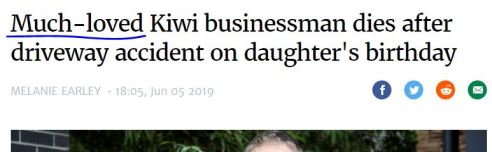
NZ Herald and Stuff publish many emotive headlines designed to manipulate the reader into clicking on them. The fault is split, however, with many small parties contributing to the result. I can tell you that as a journalist, you are rarely empowered to choose your own headline. An editor, who doesn’t know your story intimately, is forced to choose a powerful headline quickly due to urgency.
- There won’t be news publications at all if we don’t help sustain them by giving them clicks to keep their advertisers encouraged
- NZ Herald and Stuff get much of their material from The Guardian, BBC, Fairfax and Nine publications in Australia and a range of others. So the originators of the manipulative dross are often overseas.
- The Spinoff is the worst offender in NZ and all of its headlines are manipulative, deeply politicised and one-sided. Eugh.
The upshot: what you can do with your words
- Want to tug on your reader’s heart strings? That’s okay. Just ensure you’re directing them to go and do something constructive after you’ve got their attention. So set up a clear call to action.
- Want your piece of writing to be shared? The emotive thing will probably do the trick. Ensure you add photos.
- Scaring your readers into consuming your product is a very old tactic. It works, but it’s not necessarily the best. We all love companies which have a warmer, constructive outlook.

 KiwiWords - Communications, content and copywriting
Leave a Reply